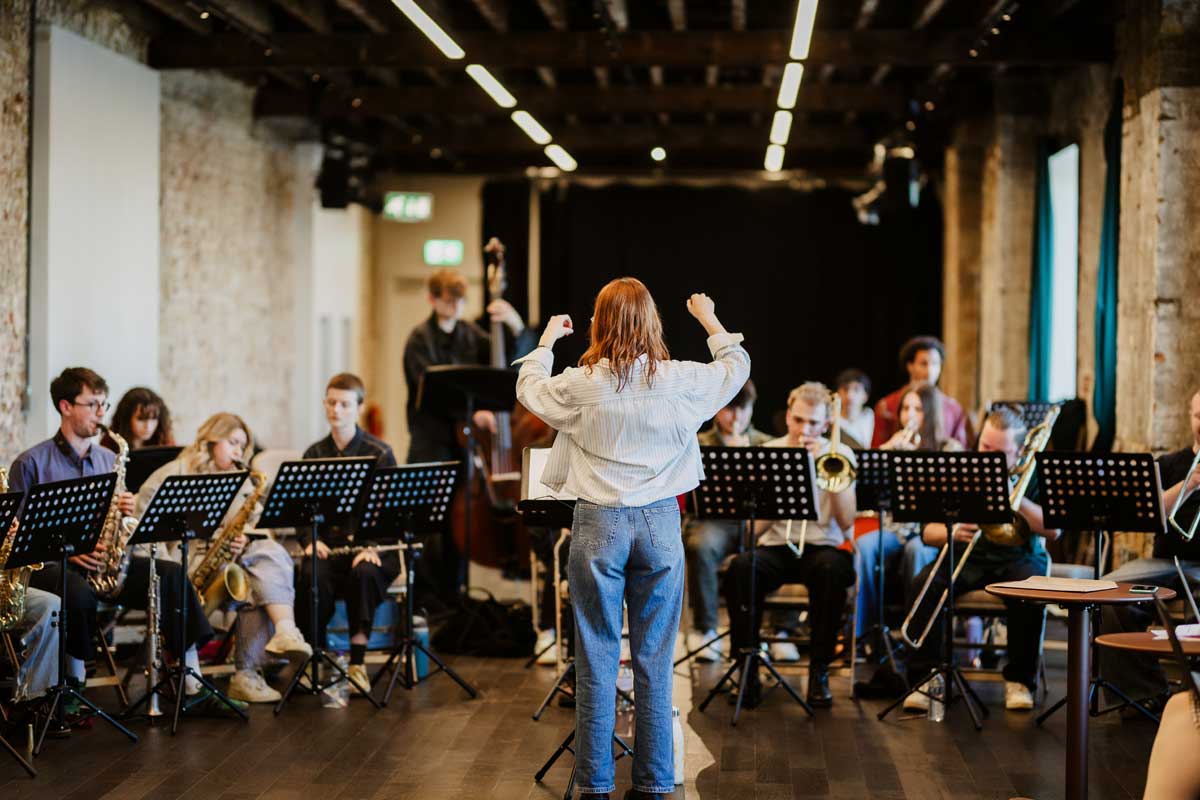
In September 2025, NYJO delivered an exploration day at Dulwich College, together with the Southwark Schools Learning Partnership, which brought together young people from local secondary schools to consider what masculinity actually means to them today.
Young people from 6 neighbouring schools had the opportunity to hear a performance by a NYJO quartet of Emerging Professional musicians (Alex Wardill, Miles Pillinger, Tay Harvey, and Jennie Beard), alongside Lead Vocalists Nandi and Germane Marvel, which was made up of music that spoke to ideas around gender and masculinity. They then had the chance to break up into smaller groups to write their own songs, exploring new definitions and ideas around positive masculinity.


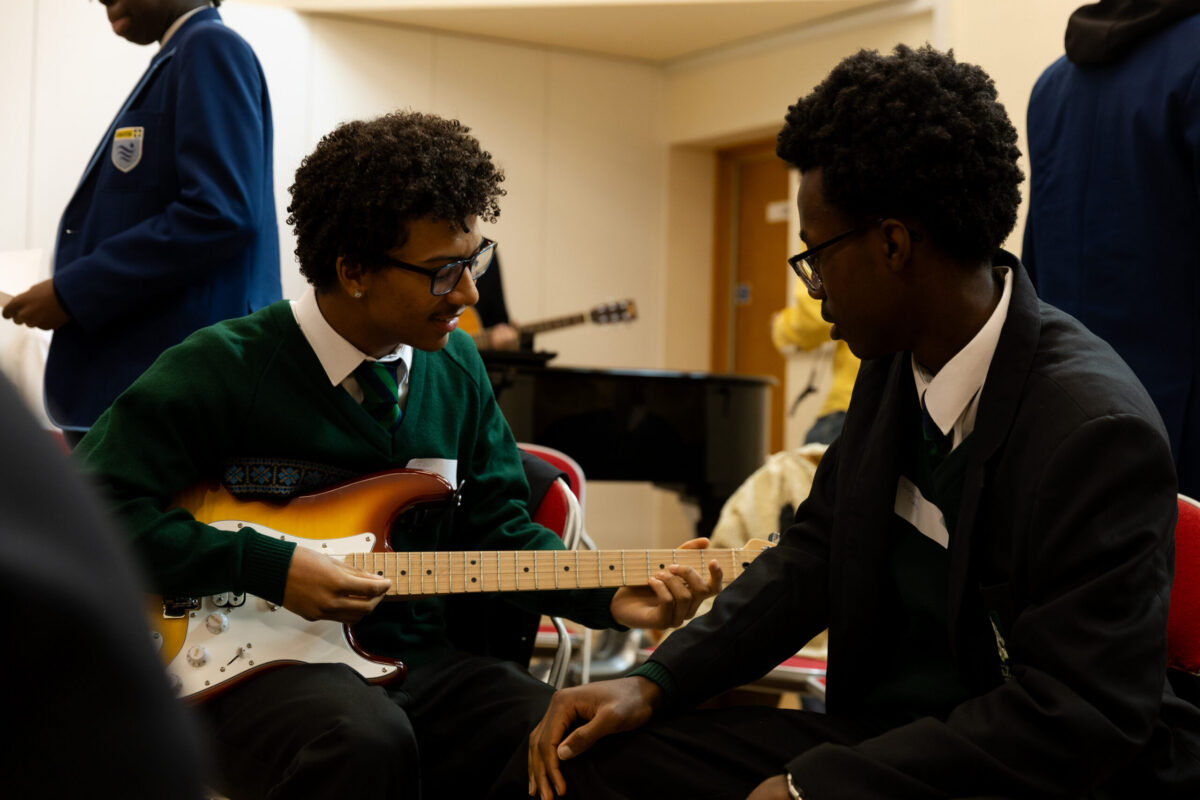
“It was great to be able to offer so many different perspectives on masculinity explored through a variety of music, and encourage the groups to discuss the themes among themselves and channel their ideas into something creative like music.”
Alex Wardill, NYJO Emerging Professional and Assistant Educator
We believe music, and song lyrics in particular, are a great way to open up conversations around gender with young people. In an article published in 1985, Sheila Davis, who was at the time Adjunct Professor of Lyric Writing at New York University, wrote that song lyrics ‘are more than mere mirrors of society; they are a potent force in the shaping of it.’ By her argument, when song lyrics today make reference to masculinity, they are not just reflecting back ideas that are already in circulation, but are instead taking an active role in shaping how young people might come to define this term.
But how much are we even aware that this is happening? Music Psychologist Dr Victoria Williamson, who wrote on this topic in her 2014 publication You are the Music: How Music Reveals What it Means to be Human states that, “There is very little research in this area. But, at the International Conference of Music Perception and Cognition in 2012 there was an interesting presentation, where a researcher had looked at women’s attitudes to the content of rap lyrics when they read them, when they listened to them in music, and when they watched them in music videos. The researcher basically found that women had a much more negative attitude towards the nature of those lyrics when they read them, less so when they listened to them, and even less so when they watched them in videos.”
In other words, unless we actively pay attention to the lyrics of the songs that we are hearing daily, there is a strong chance that we might be absorbing stereotypes or language around gender without even realising that we are doing so. The distraction posed by colourful images and catchy melodies can stop us from noticing what a song is actually trying to tell us.
As a result, it was really important to us that these sessions started with lyrical explorations of popular songs that gave young people the space to consider what messages the music that they listen to regularly are sending them around masculinity, and what from these messages they might wish to accept, as well as what they might wish to reject from their understanding of gender.
These lyrical explorations provided great springboards into the songwriting work that followed, enabling young people to shape their own lyrical content, giving voice to a new definition of masculinity that they wanted to take forward from the sessions.
“It’s really encouraging to see that these young people are thinking about masculinity, and that they’re willing to have these conversations. And then equally as willing to play their instruments with us afterwards!”
Jennie Beard, NYJO Emerging Professional and Assistant Educator
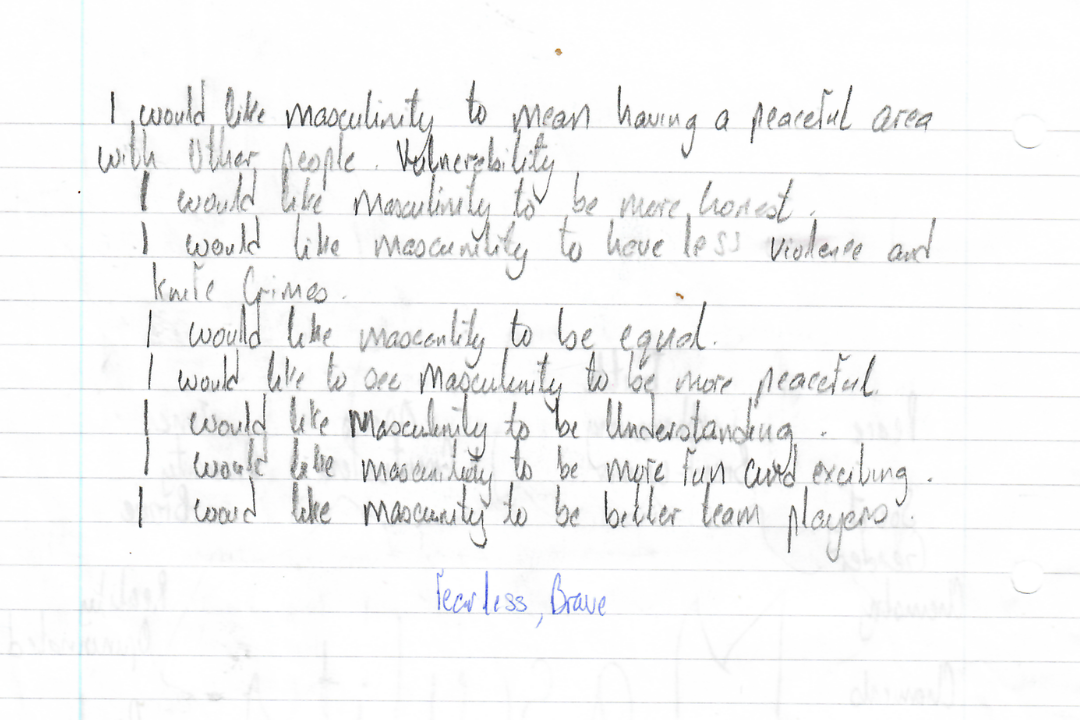
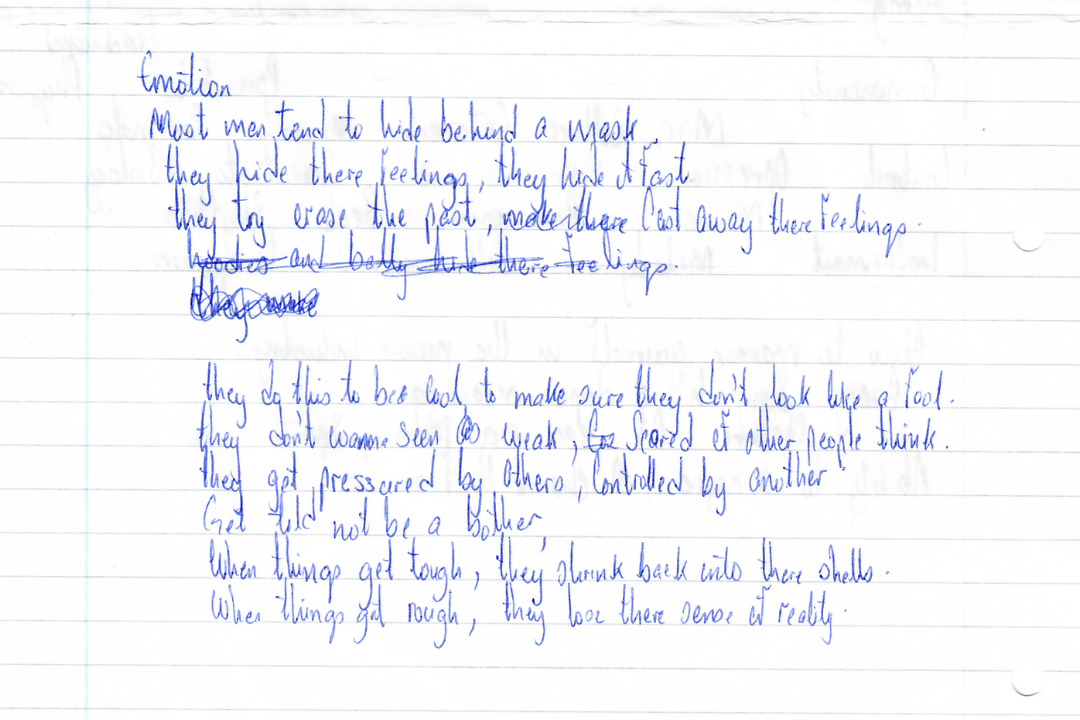
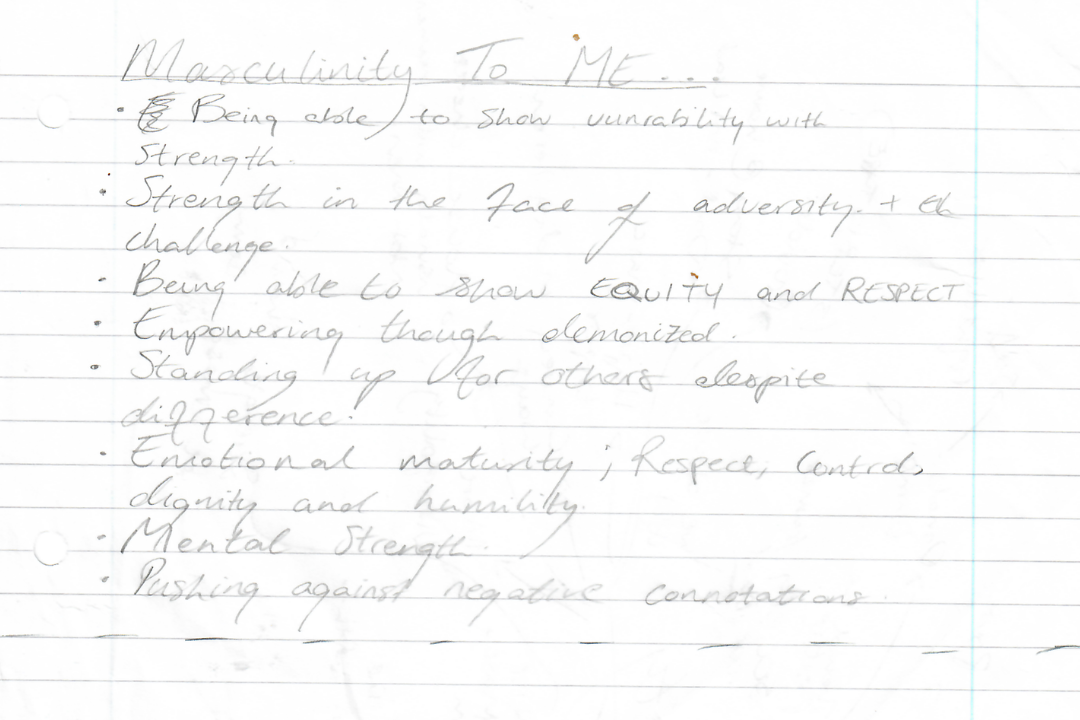
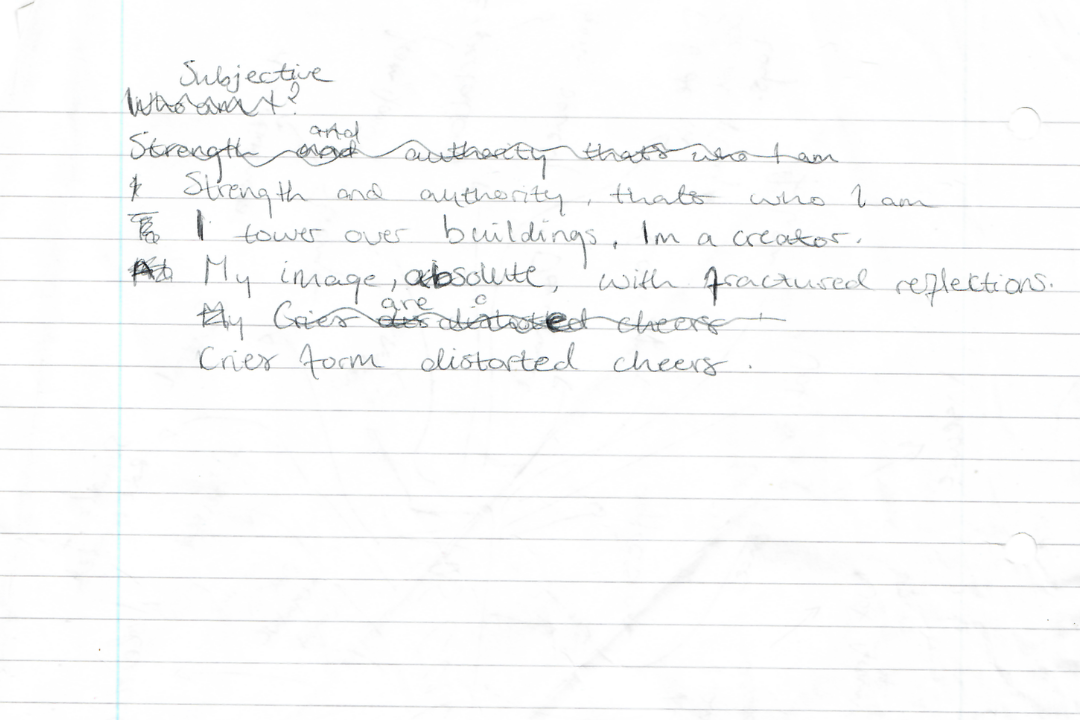
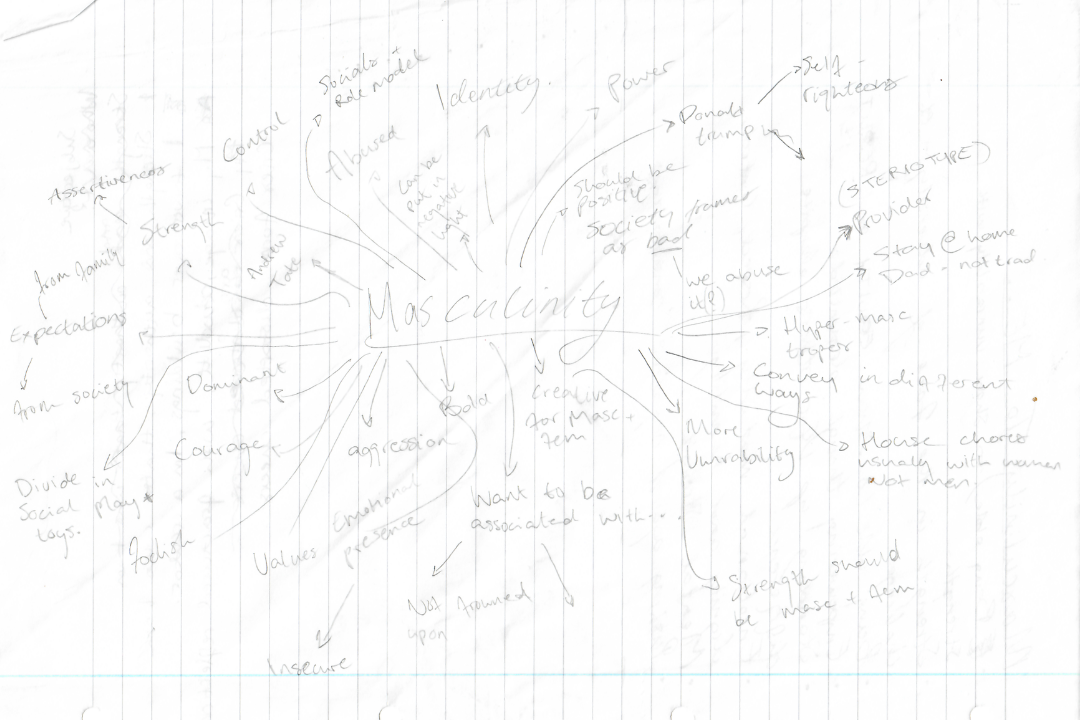
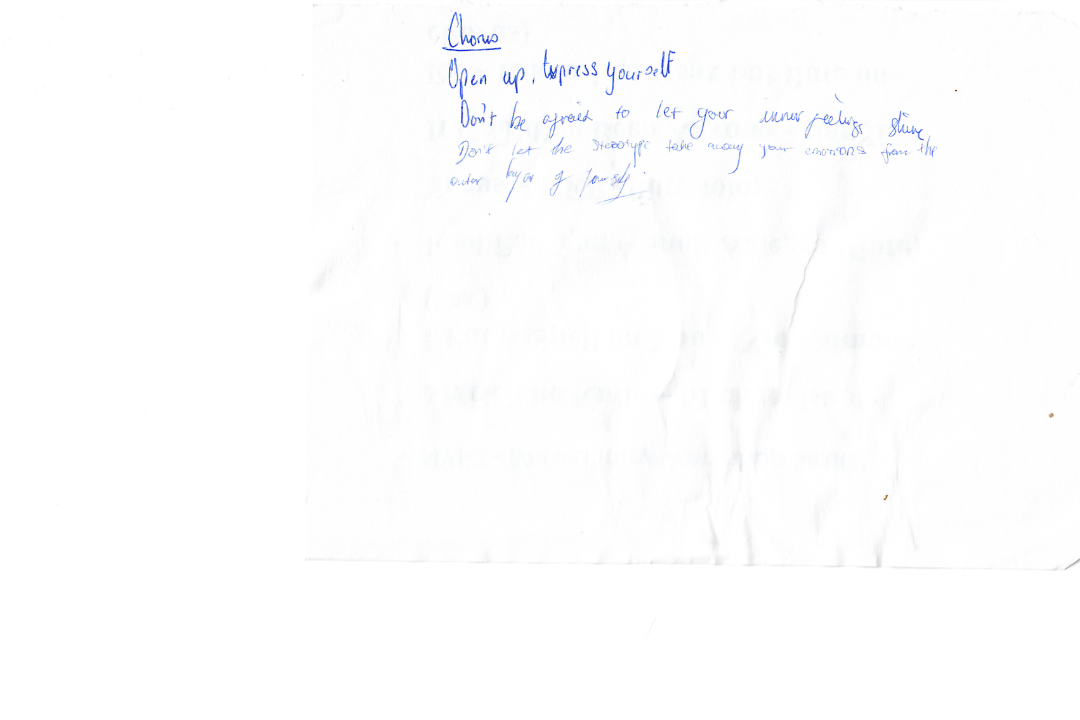
The photo carousel above shows some of the creative responses to masculinity generated by young people who attended this workshop day –
“Masculinity to me means showing vulnerability with strength; standing up for others despite difference.”
Workshop Participant
“Strength and authority; that’s who I am… My image absolute, with fractured reflections.”
Workshop Participant
Here, you can read how thoughtfully the young people engaged in the process across the day, considering their preconceived ideas that masculinity was all about ‘strength’ against what they might wish to balance this with in the future.
Following this workshop, we are delighted to present I Want to Throw Myself in and Snap Off the Mask on our NYJO Network Digital Hub. This is a modular Resource Pack designed to allow schools to replicate this work in their own classroom settings, supporting teachers with the skills needed to facilitate space for young people to explore what masculinity means to them today and to have potentially difficult but open conversations around how male, societal gender norms have affected them.
We hope that music can act as a way into opening up these conversations for young people of all genders, supporting teachers to facilitate safe, open discussions where everyone has a space to explore how they feel about the role that they have been ‘given’ by their gender in society, and the role they might now wish to create for themselves.
If you’d like to get involved in our offer for young people aged 18 and under, drop us an email anytime at [email protected].