How does one define freedom?
There are many ways in which the concept has been woven into social and judicial policy in the modern world. The United States’ national anthem declared itself the “land of the free” in 1814, 51 years before it abolished slavery.
One of the cornerstones of the European Union is freedom of movement across most member states. Nelson Mandela’s autobiography is entitled Long Walk to Freedom.
Notably, the 1948 Universal Declaration of Human Rights sets out a wide range of fundamental rights and freedoms to which everyone is entitled. Some of these include equality and non discrimination; freedom from slavery, torture, or cruel treatment; freedom of thought, expression, and religion; as well as freedom of movement within a country and a right to nationality.
In the current political climate, it would be remiss of me to overlook the historical fact that 1948 was also the year of what is termed “the first Arab-Israeli war,” which followed a UN proposal in 1947 to divide the land known as Palestine into separate Jewish and Arab states.
The UN was founded in 1945, following the end of the Second World War, and the Declaration of Human Rights was adopted by the United Nations in 1948. South Africa was a founding member of the United Nations.
“Freedom. Freedom. Freedom.”
This was the call from Kwame Nkrumah to a crowd in Accra, Ghana, when it became the first African nation to gain independence in 1957.
It was just one year after the Montgomery Bus Boycott in America, initiated by Rosa Parks, which resulted in a Supreme Court ruling declaring segregation on buses illegal.
However, 3,000 miles away from a newly independent Ghana, apartheid — a system of racial segregation and discrimination — had been enshrined into South African law for eight years. Many of the conditions under which Black South Africans were forced to survive, violated the UN’s Declaration of Human Rights. Another 38 years would pass before that system would end.
In 1959, Abdullah Ibrahim (then known as Adolph Johannes Brand) joined one of the first modern jazz groups in South Africa, the Jazz Epistles. They broke new ground by blending American jazz idioms with African rhythms, helping to shape the development of South African jazz during the apartheid era. Ibrahim, born in Cape Town in 1934, spent his early years learning piano, absorbing church music and Cape Malay traditions, and being influenced by the likes of Duke Ellington and American jazz.
Following the Sharpeville Massacre of 1960, Ibrahim left South Africa and went into exile in Europe. This heart-breaking journey led him to meet Ellington himself in Zurich in 1963, with whose support he launched an international career. He toured and recorded in Europe and the United States, and in the late 1960s converted to Islam, adopting the name Abdullah Ibrahim. 1974 was the year Ibrahim composed and released Mannenberg. This piece became a symbol of resistance against apartheid. Despite continuing to live in exile, his music circulated widely in South Africa.
In 1990, Nelson Mandela was released from prison after 27 years of incarceration, and 1994 marked the end of the apartheid regime. In that same year, Ibrahim returned to his native South Africa, where he was honoured as one of Africa’s greatest jazz musicians. His music continues to explore memory, spirituality, and African identity.
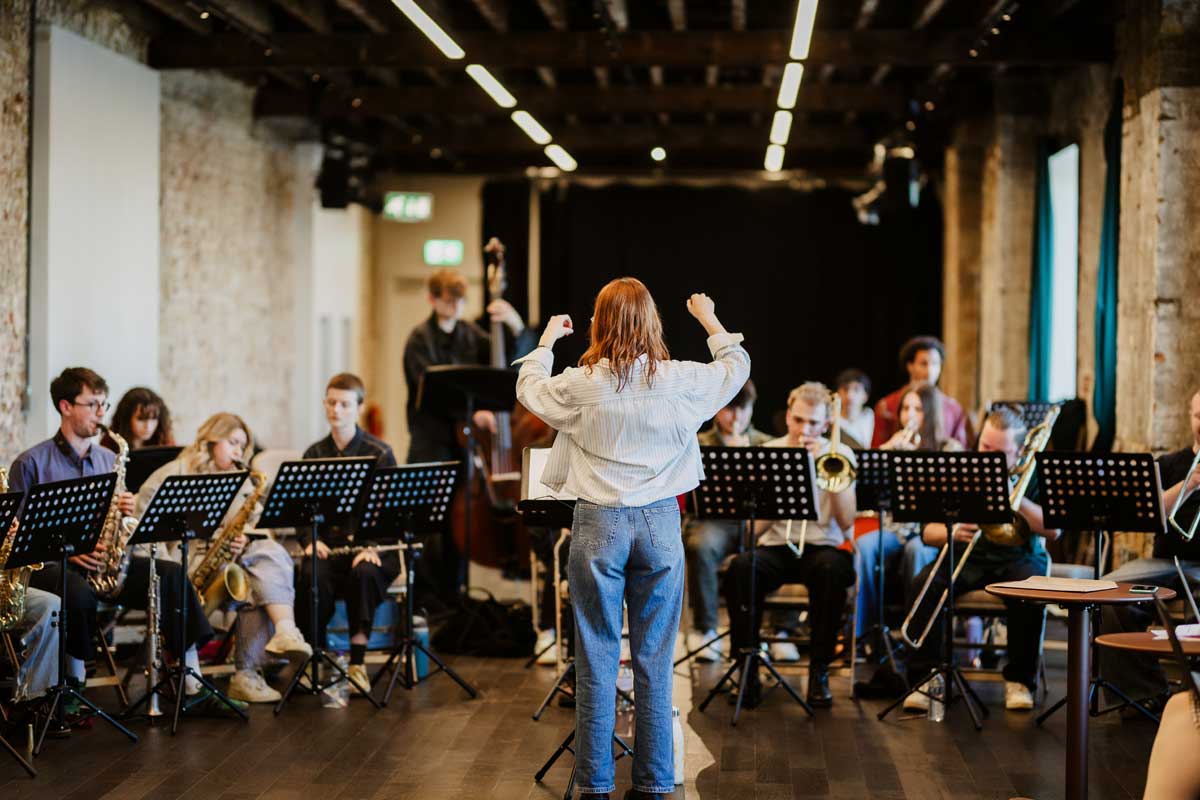
In their quest to explore the origins and influences of Township Jazz, NYJO hosted an exploration day in March 2025, developing ideas and music that would later result in a performance project celebrating Abdullah Ibrahim’s early career and the music of protest.
In partnership with the We Out Here festival, this project became one that combines learning and performance across the UK, influenced by the mentorship of Abdullah Ibrahim. With consideration for the deep connection with identity that the project holds, we felt it important for the loudest voices in the room to be those with lived experience. After all, only the one wearing the shoe truly knows its pinch.
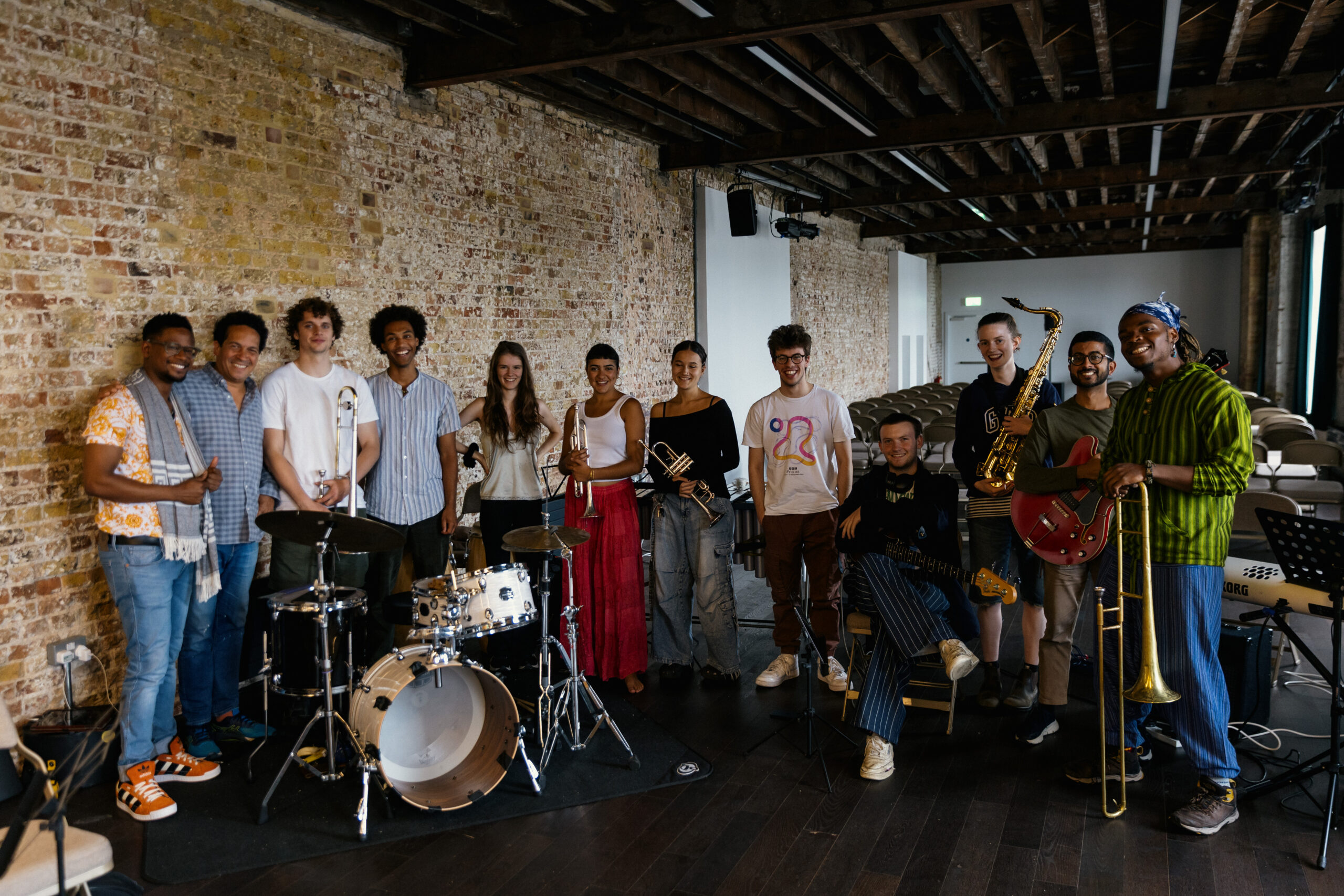
We approached Pete Letanka of the Pete Letanka Trio, who agreed to lead the project. He is an incredible jazz pianist whose own father spent many years in exile in Europe. We also approached Thanda Gumede, a UK-based South African composer, vocalist, and multidisciplinary artist of Xhosa and Zulu heritage, who agreed to join us as guest artist.
Gumede worked particularly with our vocalists to help them discover their sound within this underrepresented genre of jazz. With the support of both artists, we were able to produce music rooted in resilience, protest, and joy. Between these two pillars of township jazz, the group was able to explore its origins, its relationship to freedom, and the reality that the joy in this music was hard won.
Learning and Participation is a cornerstone of NYJO’s mission. It is important to us to maintain a spirit of reciprocity with the local areas in which We Out Here is hosted. We ran a series of workshops in Dorset and Ramsgate before arriving at the festival. These workshops allowed young people in the local area to explore South African rhythms and melodies, while also considering what it means to be free today.
In Ramsgate, we partnered with Pie Factory Music and People Dem Collective, two organisations working with young people in the local area. Pie Factory Music offers a safe space for young people in Thanet to access life-enhancing opportunities through youth work, music, and arts projects, while People Dem Collective focuses on providing space, engagement, and inclusion for Black, Brown, and diaspora communities.
Three artists each led a day of workshops in Ramsgate, giving young people a range of access points and ideas. They ran introductory sessions, offering access to marimbas, tubas, and creative lyric writing.
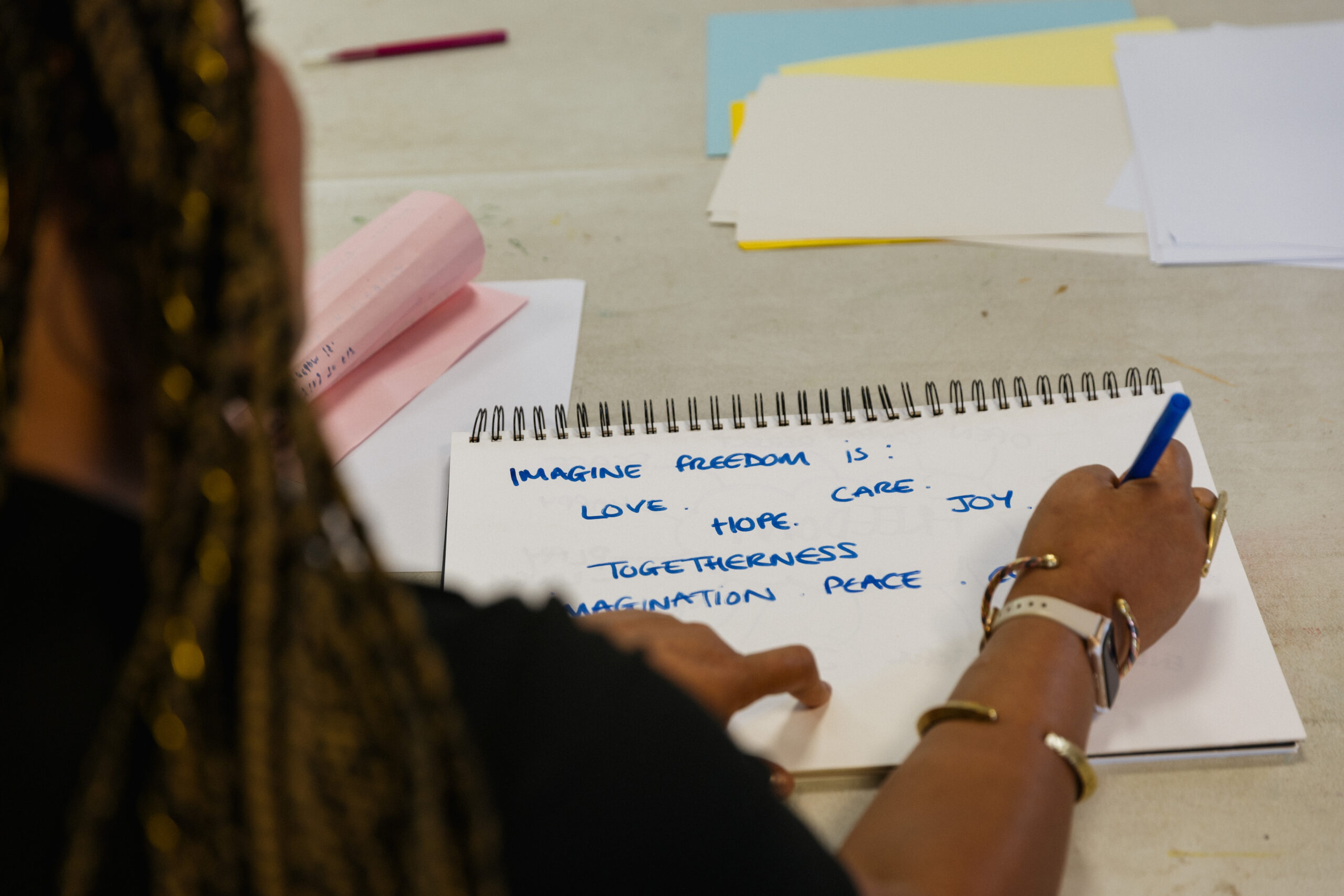
In Dorset, we visited schools and residential care homes, running workshops exploring freedom and apartheid within the broader context of colonialism, and the ways in which township jazz emerged as something remarkable. We ran two days of workshops, helping to shift the narrative of how South African history is taught in the UK. Benji, one of our Emerging Professionals, provided live musical experiences, ensuring there was material to engage every participant.
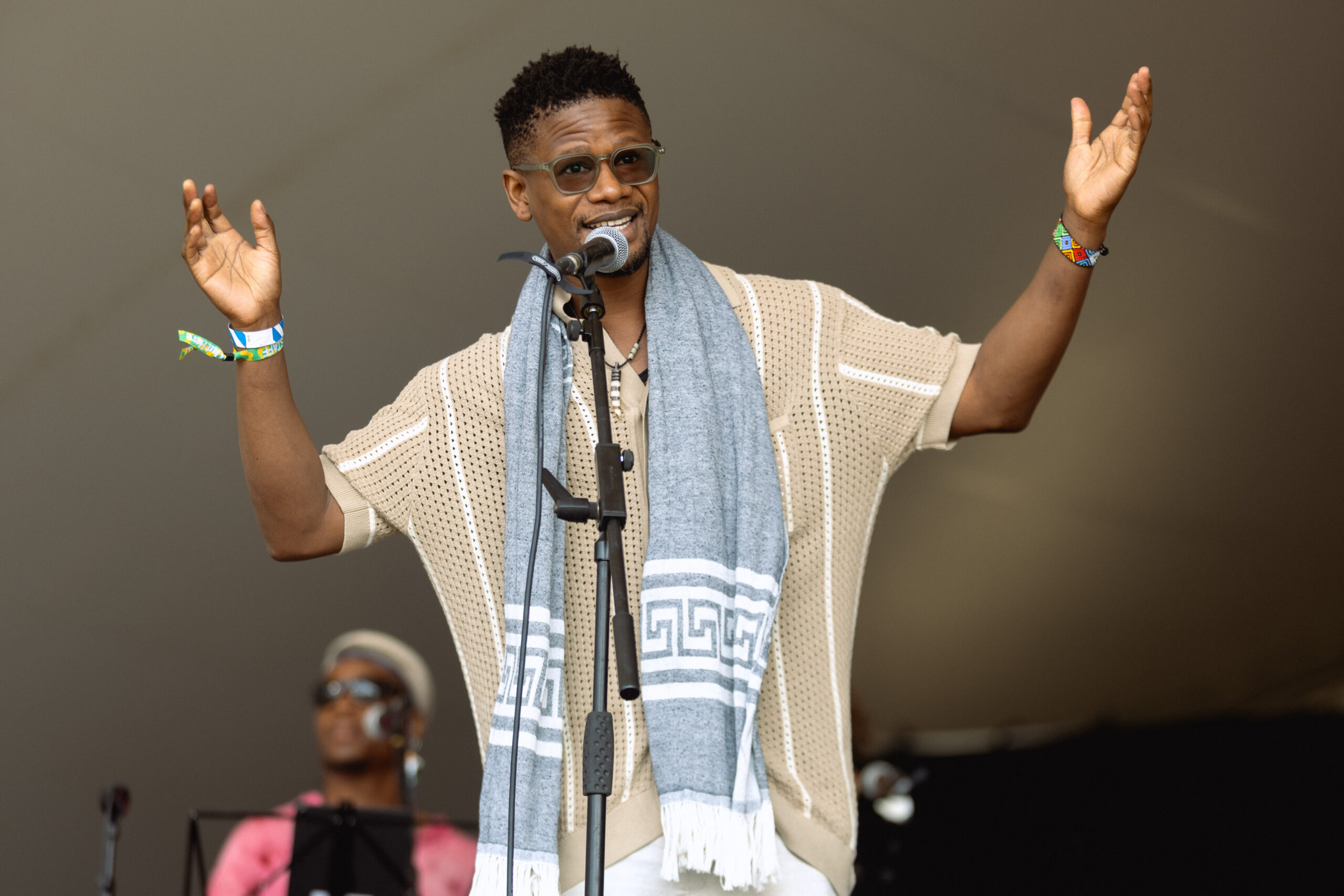
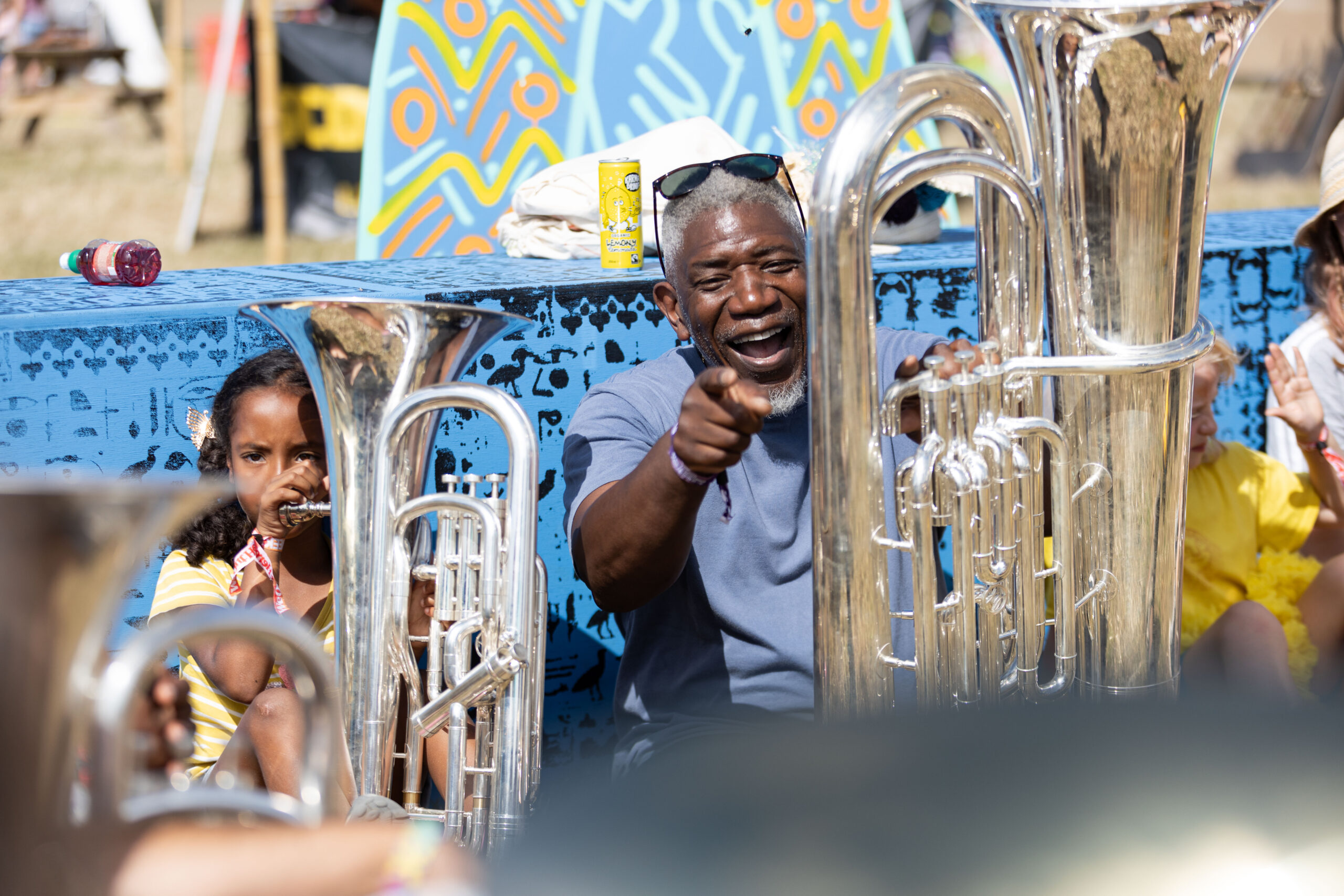
At We Out Here festival itself, supported by our NYJO Emerging Professional musicians, professional Tuba player, educator and NYJO trustee Andy Grappa ran interactive tuba workshops. He helped participants go from never having held a tuba before to playing the bass line of Abdullah Ibrahim’s African Marketplace in 45 minutes. On the final day of the festival, workshop participants had the chance to perform in the Family Field alongside an ensemble of NYJO musicians, fresh from their own performance on the Lush Life stage.
How does one define freedom?
Throughout history we have seen it take many shapes and forms. We have seen it declared and denied, often simultaneously. We have seen it defined and deconstructed. We have seen it prescribed and refined. The truth is that it is a concept which is ever evolving from generation to generation, and perhaps this is for the best.
Our world and our realities are constantly changing and reshaping. I therefore believe it best to give voice to the next generation on the subject, as it is those who come after us who will decide how freedom is defined in every version of the future that will exist.
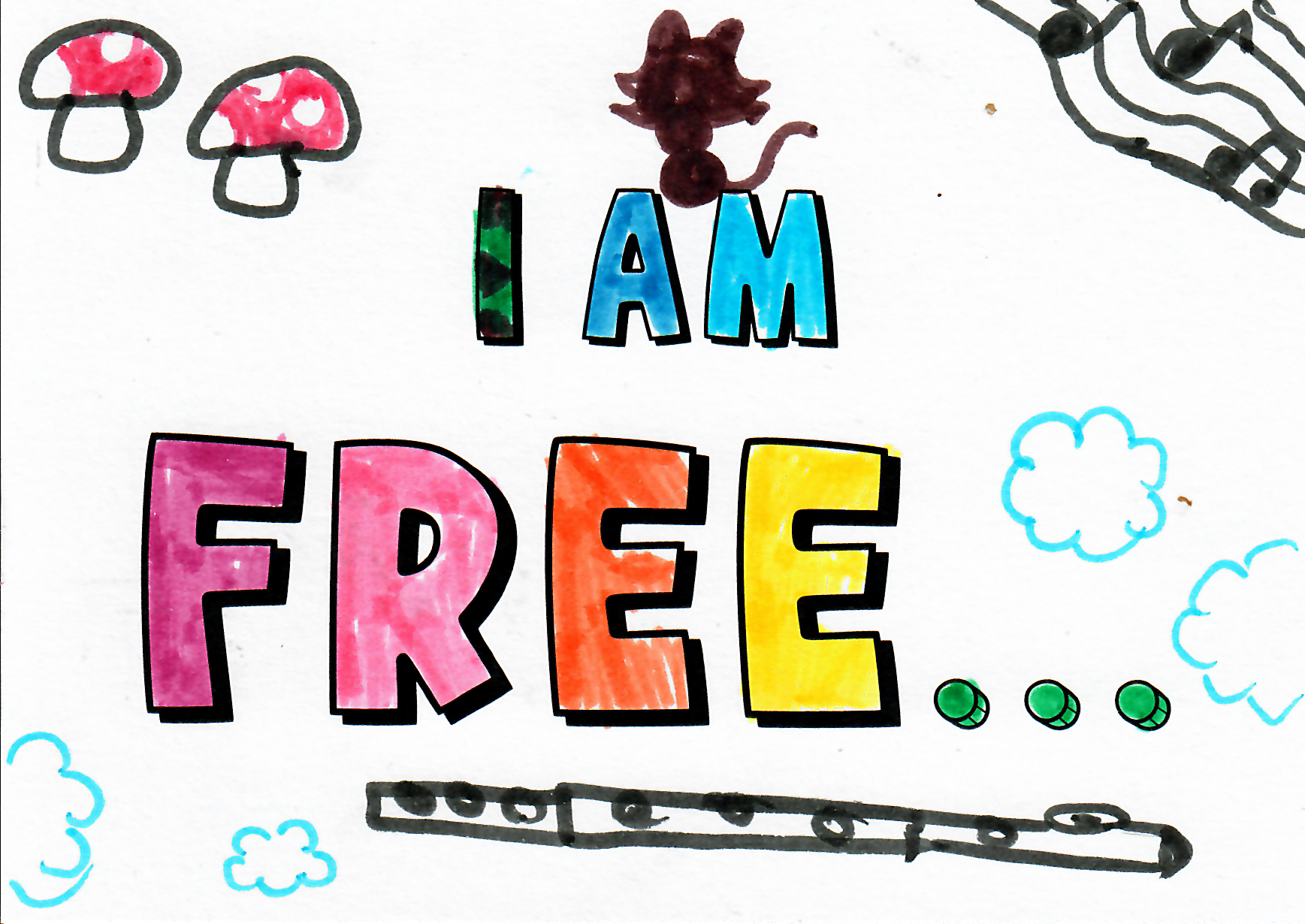
With this in mind, NYJO has been asking the young people we work with what freedom means to
them.
Feel free to explore their thoughts and step from a murky past into a more hopeful future.
Words by Eve Abiodun